

< Research Reports 21 Oct, 2026
Hardware Innovation: Why Building a Prototype Is Easy, but Achieving Commercial Excellence Is Hard
Translating Breakthrough Concepts into Reliable, Market-Ready Products
In the high-stakes world of hardware development and tech startups, launching a proof-of-concept prototype is often celebrated as a major milestone. However, taking a raw prototype and transforming it into a refined, mass-producible product that meets demanding market needs and delivers an exceptional user experience is an entirely different battle—and one where many promising ventures fail. Why is building a prototype relatively straightforward, while achieving commercial excellence is notoriously brutal?
Case Study 1: The Ultra-Low-Power Ring Scanner
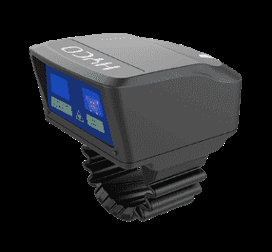
Figure 1: The World’s Smallest Ring Scanner
During my tenure at HYCO Technology, we applied first-principles thinking to analyze the future of industrial scanning. We realized that the ultimate form factor for handheld scanning devices had to be an ultra-lightweight ring scanner. To enable widespread adoption across smart manufacturing, commercial retail, and logistics, we defined five non-negotiable core requirements:
FIRST-PRINCIPLES CRITERIA FOR INDUSTRIAL RING SCANNERS
Ultra-Lightweight Ergonomics: Weigh under 20 grams so workers can wear it continuously for 8 hours without fatigue.
All-Day Battery Endurance: Provide at least 18 hours of continuous operation per charge, comfortably covering two full working shifts.
User Comfort & Safety: Ensure skin-safe, hypoallergenic materials with quick-swap straps and a emergency break-away mechanism to protect fingers from snagging hazards.
Industrial-Grade Durability: Pass 3-meter drop tests and achieve at least IP66 ingress protection.
At the time, existing technology made it virtually impossible to meet all five criteria simultaneously. Delivering a compact, industrial-grade device with multi-shift battery life required a generational leap: reducing power consumption to just 5% of traditional solutions. leveraging HYCO’s deep technical capabilities, our team developed a working functional prototype in just 4 years. However, refining and perfecting that prototype into a market-ready, commercial-grade product required an additional 10 years of continuous iteration.
Case Study 2: PCD (Package Call Driver Solution)
After spending 18 months conducting on-site field research alongside delivery drivers, package sorters, and loaders across the United States, I observed a striking inefficiency: last-mile delivery accounts for up to 50% to 70% of total logistics costs, and drivers waste 50% to 70% of their daily shift simply searching for packages inside their delivery vehicles.
To solve this, I founded GHE Solution INC in Silicon Valley (“GHE” standing for Go Home Early). Guided by first principles, we adopted an “embrace information entropy” model rather than traditional entropy control, aiming to reduce last-mile delivery costs by 50% to 70%. In just one year, we successfully developed the hardware and system topology prototype for the Package Call Driver (PCD) system.
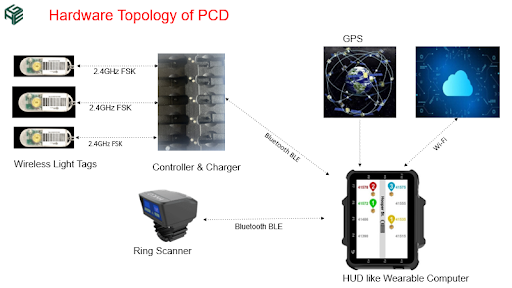
Figure 2: System Topology of the GHE Package Call Driver (PCD) Solution
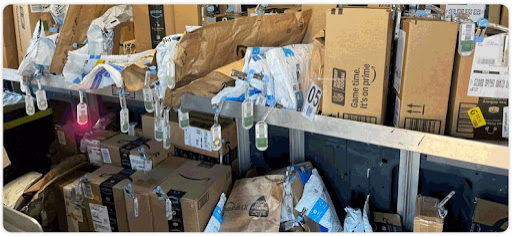
Figure 3: On-Site Pilot Deployment inside a Commercial Delivery Van
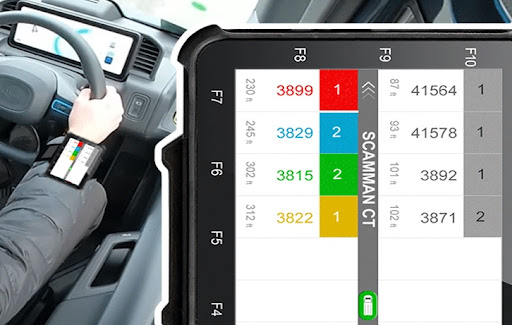
Figure 4: Minimalist Driver UI on HUD-like Wearable Computer
While the working prototype took only one year to build, perfecting it required over two years of relentlessoptimization across dozens of real-world operational challenges:
Binding Speed: Reducing Wireless Light Tag package pairing time from over 10 seconds down to under 2 seconds.
Precise Parking Detection: Combining wearable computer GPS and G-sensor telemetry to accurately distinguish actual delivery parking from temporary traffic stops or stoplights.
EMC & Interference: Eliminating electromagnetic compatibility issues between Wireless Light Tags and Base Stations.
Ergonomic UI & Workflow Elimination: Designing an ultra-simplified interface that eliminates every redundant physical driver movement.
Why Prototype Is 1% of the Journey and Excellence Is 99%
The key structural reasons why hardware prototyping is relatively easy while commercialization is exceptionally difficult include:
1. Cost and Yield vs. Pure Proof-of-Concept: A prototype only needs to validate a concept, ignoring unit cost and yield rates. However, commercial viability requires rigorous cost reduction, high manufacturing yields, and uncompromising reliability.
2. Interdisciplinary Coordination: Prototypes focus on core technical breakthroughs. Refining a commercial product requires cross-functional coordination across hardware, software, industrial design, manufacturing supply chains, and regulatory compliance.
3. Real-World Operating Environments vs. Lab Conditions: Prototypes are tested in controlled labs. Commercial products face unpredictable real-world conditions—such as unexpected 30kV ESD discharges or heavy wireless RF interference.
4. Team Persistence and Craftsmanship: Building a prototype offers instant gratification and excitement. Product refinement requires tedious, methodical tuning that demands immense stamina and craftsmanship.
Executive Summary
Building a prototype represents only about 1% of total product development effort. The remaining 99%
Keep reading
Download the PDF version
Please fill in your information to download. Fields marked * are required.


Copyright @ GHE SOLUTION INC. All Rights Reserved